

Data Access for Researchers under the Digital Services Act: From Policy to Practice
22.09.2025
This paper provides an overview of researchers’ initial practical experience with access to publicly available data based on Art. 40(12) DSA as well as an in-depth description of procedure for access as set out in Art. 40(4) DSA, thereby comprehensively characterising the data access options outlined in the DSA and DA.
Response to the Consultation on the Delegated Regulation on Data Access provided for in the Digital Services Act
10.12.2024
This response provides feedback on the Delegated Regulation on Data Access provided for in the Digital Services Act. The first section highlights aspects which are practical, workable or welcomed by scientists for other reasons. The second section outlines further opportunities for clarification, additions, or modifications to the draft text.
Enabling Research with Publicly Accessible Platform Data: Early DSA Compliance Issues and Suggestions for Improvement
10.04.2024
To provide the Commission and Digital Services Coordinators with insights for their oversight work, this paper offers an analysis of early experiences with Article 40(12) data access requests and suggestions for improvement. It is based on conversations with researchers and on data collected through the DSA 40 Data Access Tracker.
What the Scientific Community Needs from Data Access under Art. 40 DSA: 20 Points on Infrastructures, Participation, Transparency, and Funding
01.10.2023
This policy paper aims to inform the expected Delegated Act of the EU Commission as well as the legislative process for the German Digital Services Act (Digitale Dienste Gesetz) and to formulate necessities from the perspective of platform researchers. This perspective is of utmost importance, as research on systemic risks depends on the expertise of scientific actors.
Response to the Call for Evidence DG CNECT-CNECT F2 by the European Commission
23.05.2023
This response to the EU Commission's DG CNECT includes feedback regarding data access needs by researchers (non-private communication data, user account metadata, data governance documentation), requirements for data access application and procedure, data access formats and involvement of researchers, and access to publicly available data.
Datenzugang ist kein Plattformprivileg, sondern ein Recht
20.02.2026
Die EU-Kommission hat X ein Bußgeld auferlegt, weil der Datenzugang, den die Plattform Forschenden zur Verfügung stellt, nicht DSA-konform ist. Die Urteilsbegründung ist bemerkenswert: Forschung wird darin nicht länger nur als Beobachterin von Plattformmacht verstanden, sondern als aktiver Bestandteil regulatorischer Kontrolle.
What the X Fine Reveals About Data Access Under Article 40 of the Digital Services Act
12.02.2026
It’s a busy time for misinformation about misinformation.
On January 28, the Republican-led House Judiciary Committee published, on X, a document from the European Commission outlining the reasons behind its December decision to issue a €120 million fine against X for non-compliance with the EU’s digital safety rulebook, the Digital Services Act (DSA).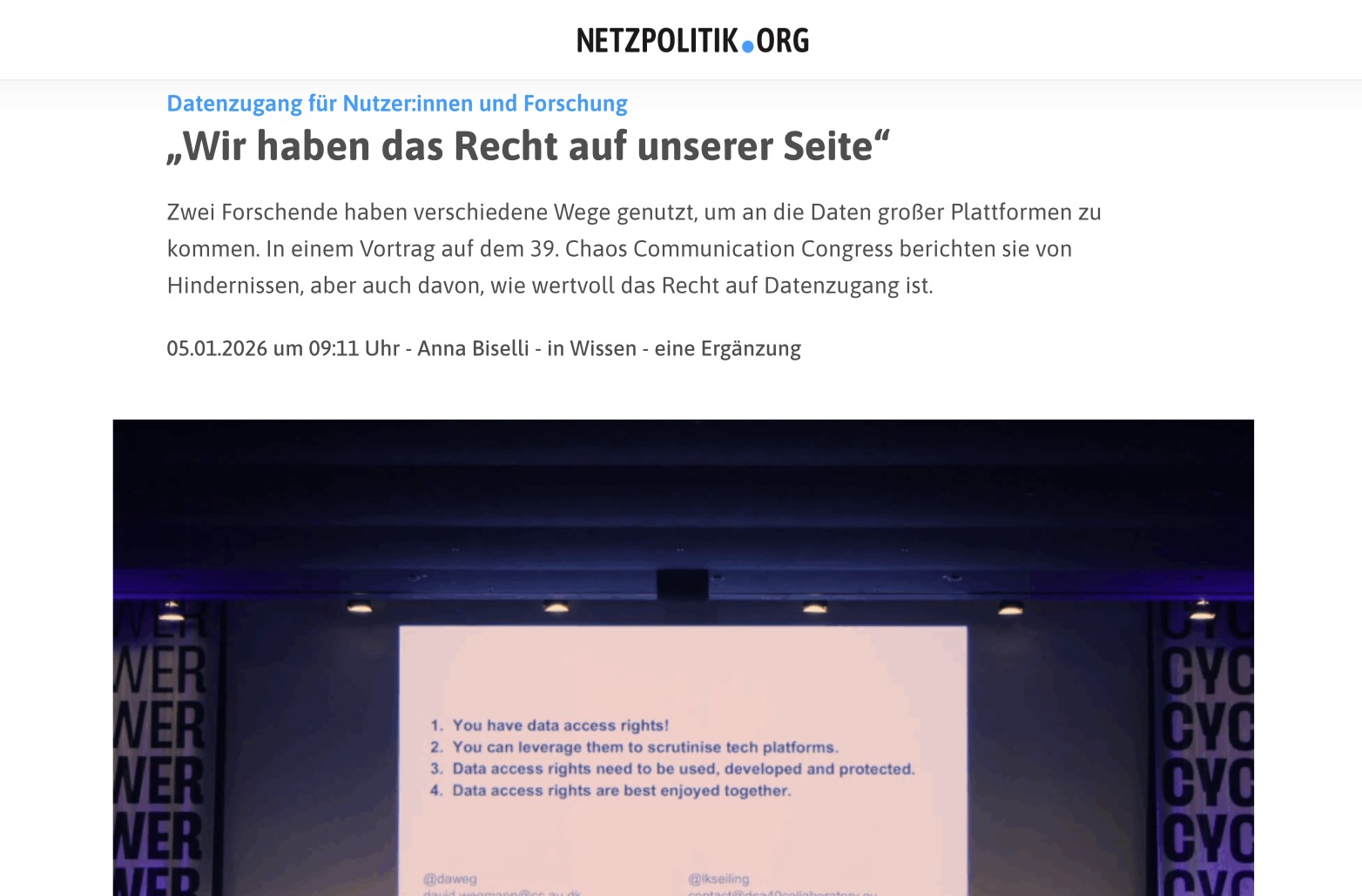
Datenzugang für Nutzer:innen und Forschung: „Wir haben das Recht auf unserer Seite“
05.01.2026
Zwei Forschende haben verschiedene Wege genutzt, um an die Daten großer Plattformen zu kommen. In einem Vortrag auf dem 39. Chaos Communication Congress berichten sie von Hindernissen, aber auch davon, wie wertvoll das Recht auf Datenzugang ist.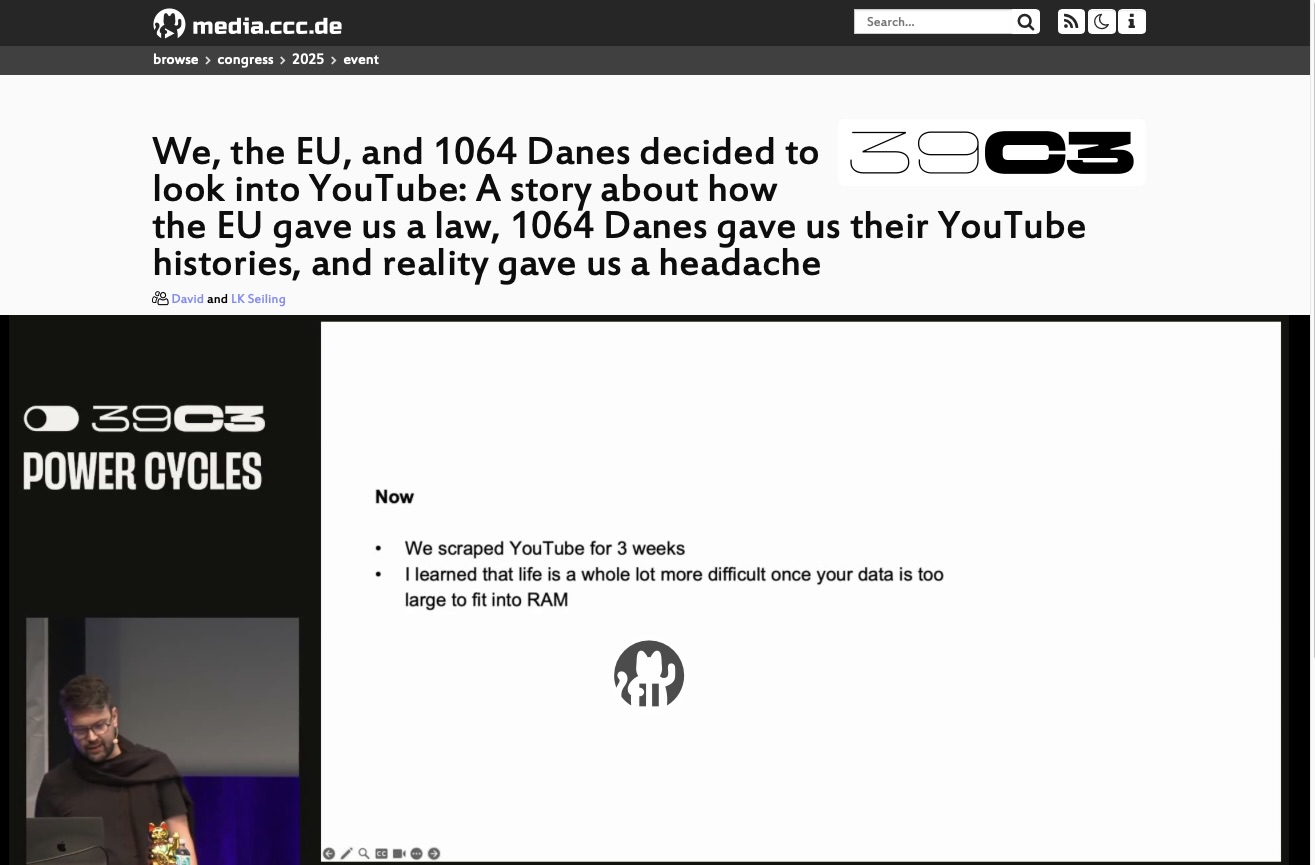
We, the EU, and 1064 Danes decided to look into YouTube: A story about how the EU gave us a law, 1064 Danes gave us their YouTube histories, and reality gave us a headache
30.12.2025
We explore what happens when Europe’s ambitious data access laws meet the messy realities of studying major digital platforms. Using YouTube as a central case, we show how the European Union’s efforts to promote transparency through the GDPR, the Digital Services Act (DSA), and the Digital Markets Act (DMA) are reshaping the possibilities and limits of independent platform research.
In Critical Condition – How To Stabilize Researcher Data Access?
12.11.2025
Despite social media’s omnipresence, we still have little insight into the global platforms mediating a significant part of people’s daily lives.
This lack of understanding of social media has become more pressing against the backdrop of a decline in democratic norms worldwide. Democracies are seeking ways to preserve systems of checks and balances over global tech companies now worth more than many countries’ annual GDPs.
Why Independent Researchers Need Better Access to Platform Data
09.11.2025
This episode was recorded in Barcelona at this year’s Mozilla Festival. One session at the festival focused on how to get better access to data for independent researchers to study technology platforms and products and their effects on society. It coincided with the launch of the Knight-Georgetown Institute’s report, “Better Access: Data for the Common Good,” the product of a year-long effort to create “a roadmap for expanding access to high-influence public platform data – the narrow slice of public platform data that has the greatest impact on civic life,” with input from individuals across the research community, civil society, and journalism.
Wer beim Forschungsdatenzugang jetzt liefern muss
21.07.2025
Das letzte Puzzlestück für den Forschungszugang für nicht öffentlich verfügbare Plattformdaten ist da. Die Aufgaben für DSCs, Forschende und Plattformen sind nun klar verteilt.
Time To Deliver: Stakeholder Roles in the EU’s Delegated Act on Data Access
10.07.2025
The European Commission has adopted the Delegated Act (DA) on data access under Article 40 of the Digital Services Act (DSA) on July 2. The DA specifies a number of important processes, details, and rules for researcher access to non-publicly available platform data.
Zugang für Forschung: So müssen Online-Dienste ihre Datensilos öffnen
03.07.2025
Große Online-Plattformen sind für viele schon lange Teil des Alltags. Wie sie im Detail funktionieren, wissen aber weitgehend nur die Betreiber. Diese Blackboxen soll der Digital Services Act öffnen. Nun hat die EU-Kommission Details für den Datenzugang für Forschende veröffentlicht.
Non-Public Data Access for Researchers: Challenges in the Draft Delegated Act of the Digital Services Act
05.12.2024
This blog post examines the European Commission's draft Delegated Act under the Digital Services Act (DSA). It reviews core aspects of the draft, such as the proposed process, a centralized "DSA data access portal" for managing requests, platform data inventories, and mediation for dispute settlement. While the draft addresses many researcher demands, its effectiveness hinges on resolving various practical challenges which currently stand in the way of meaningful and equitable data access.